
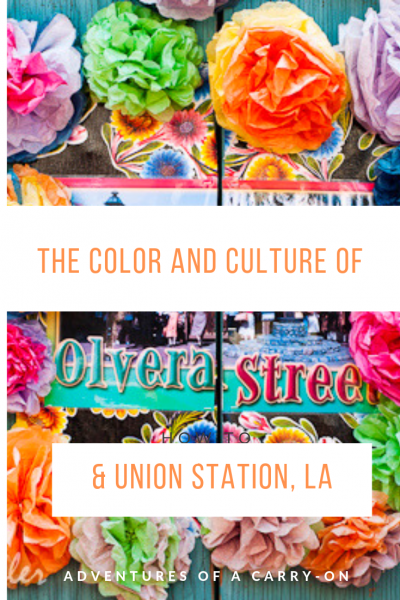
Los Angeles is a culturally diverse city with a fantastic food and wine scene and some of the best museums in the world. There’s much to explore in the historic heart of Los Angeles including one of my favorite spots, Olvera St.
Most people think of Olvera St. as just a place to shop for Mexican imports. But the history is fascinating. To learn more about Los Angeles history, keep reading.
El Pueblo De Los Angeles and Olvera Street
The area known as El Pueblo De Los Angeles, which includes Olvera Street, was settled in 1781 by the Spanish though the inhabitants were Mexican. The first houses, adobe structures, the parish church, and the first streets, were built during this period.
This is where the city of Los Angeles originated. Spanish rule lasted until 1821 when Mexico declared independence from Spain.
By the 1880s, the railroad brought a massive influx of immigrants, mainly from Mexico. The area continued to be the center of civic life until after the Gold Rush, when it fell on hard times. By the early 1900s, El Pueblo De Los Angeles was marked for demolition.

How Olvera St Became A Tourist Attraction
Originally, Olvera St. was part of Little Italy. Italians businesses had thrived there since 1823. That is a legacy you can still taste today at San Antonio Winery, LA’s oldest continuously operating winery, founded just a few miles from Olvera Street.
Luckily, in the 1920s a woman from San Francisco, Christine Sterling, became interested in the history and sociocultural value of the Pueblo.
She drafted a plan to save the Adobe and plaza from demolition, turning Olvera Street into a Mexican marketplace and tourist attraction. Sterling is responsible for what we know as Olvera Street today and the restoration of the Avila Adobe.
Avila Adobe Is Saved
There is no doubt that without Sterling’s intervention, the Avila Adobe would likely be dust in the wind. She secured funding from the wealthy citizens of Los Angeles and took advantage of hard physical labor provided by prisoners from the county jails to complete the restoration. In 1929, Olvera Street was closed to traffic, and in 1930, Paseo de Los Angeles officially opened. In 1953 it was listed as a historic monument by the City of Los Angeles.

The Avila Adobe
This quote from Sterling’s diary lends some insight into the times, and the struggles she faced completing this restoration, “One of the prisoners is a good carpenter, another an electrician. Each day I pray they will arrest a bricklayer and a plumber.”
Not only did this woman have a vision, but she also had a sense of humor, though I’m sure she was quite sincere in her prayers. She lived in the Avila Adobe until her death in 1963.
If you visit Olvera Street today, you’ll find shops and restaurants selling brightly colored piñatas, candles, maracas, blankets, and clothing. Musicians perform in the outdoor plaza. Olvera Street is a beautiful reminder of the origins of the City of Los Angeles. For more interesting things to do in Los Angeles, check out the guide to day trips near the city.
For more information on celebrations and cultural activities in the area read:
http://www.calleolvera.com/events/
Union Station

Just across from Olvera Street is the beautiful Art Deco Union Station. Train stations rank high on my list of cool buildings and spaces. I love the feeling of adventure that comes over me when I walk into a train station. For more art deco architecture , this one in Texas, read The Esplanade at Fair Park, An Art Deco Treasure.
Trains are a wonderful way to slow travel. Though not every train station is an architectural treasure, Union Station in Los Angeles is exceptional. Inside and out, it is the essence of a time when rail travel was the norm in the United States, and traveling was more relaxed.

Clock Tower
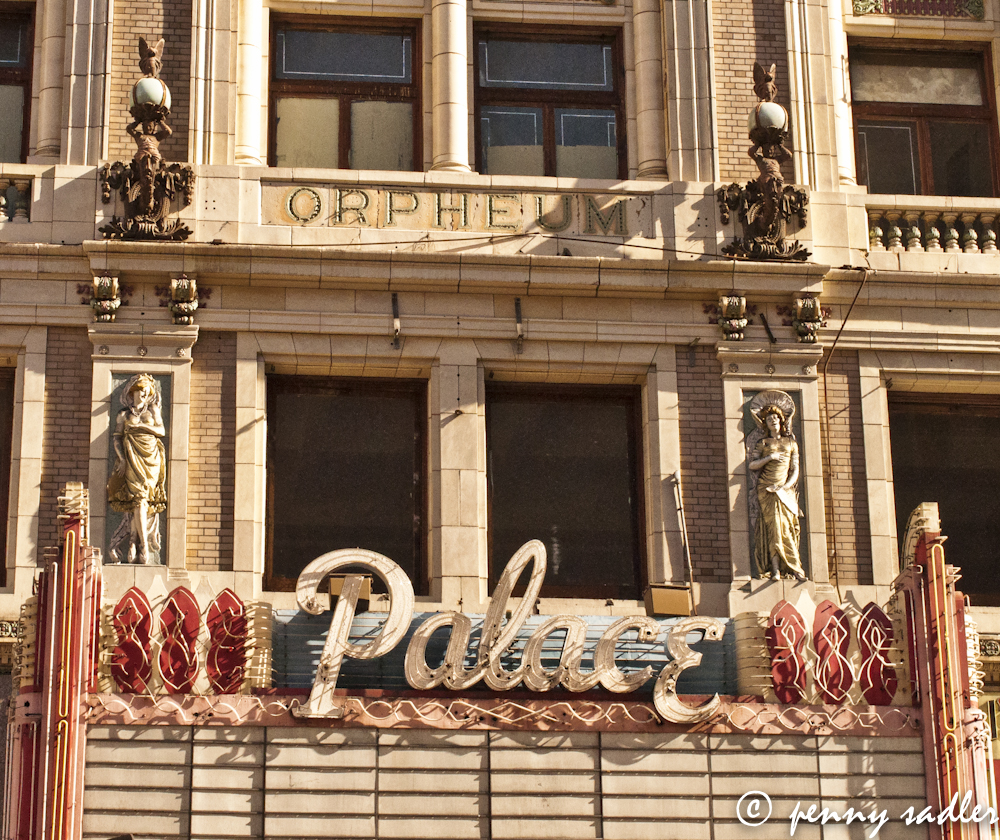
Built in 1939, Union Station was the last of the “Grand” stations. The design is a mix of Spanish Mission Revival and Streamline Modern Art Deco. Inside, archways and terra cotta tile floors carry out the Spanish design influence. The highly polished floors add to the vast look and feel of the station.

art deco details at Union Station
A hallmark of the design esthetic of the Great Depression, dark wood veneer interiors and cozy spaces that add a film noir feel can be found in the station’s bar. Stay for a drink and pretend you’re enacting a scene from The Thin Man series.

Union Station was placed on the National Register of Historic Places in 1980. If you go, plan to spend about half a day enjoying the sights. Have lunch on Olvera Street or at the famous Philippe the Original and then explore Union Station yourself!
Where is your favorite train station?
If you enjoy historic walks read my post on Historic Downtown Los Angeles.
All content and photographs copyright Penny Sadler.



23 comments
I could embrace this side of LA. Get me away from all of the traffic and commercialism.
There are many little neighborhoods like this in LA. Just have to know where to find them.
Thanks for this! I’m actually a big fan of LA. The city gets a lot of bad press, but honestly there’s a lot to do and see in LA, if you just dig a little. I’d never heard of Olvera Street before!
LA is good fun with lots of history. You’d like Olvera St. It is a bit small but you have a lot in the immediate area, Union Station, China Town, The Adobe, Pico House, oh and Philipe’s for a French dip sandwich.
Beautiful and colourful!
Certainaly a lot more colorful than the Olvera it’s named for in Spain! Looks fun.
I love taking pictures of colorful places. They make everything so…alive! The quote from Sterling’s diary made me laugh. What a sense of humor 🙂
1781? Nice to know Los Angeles has some serious history!
Terry, aren’t you a native of California?
It’s wonderful to see well preserved places like this and also get a nice background and history. Thanks for sharing a little about this lovely area.
Thanks Noel!
Ahh I love Olvera Street! Like you, I grew up in California but didn’t spend too much time in downtown L.A. I went when I was last home though, and there is so much good stuff to see.
Beautiful pictures, by the way!
There really is a lot there. Thanks!
Oh, these colors! Love them!
Me Too!
[…] If you go, plan to spend about half a day or more there, enjoying the sights and having lunch on Olivera Street or in […]
I am a sucker for color and markets so this was right up my alley!
I know me too! 🙂 If you’re ever in LA the area around Olvera St. is a great tourism spot. Besides Olvera St. there’s Union Station and China Town. There’s also some famous place for french dips sandwiches, I can’t think of the name, I don’t eat them, hence I can’t remember. 🙂
Seems to be ok now,
I just liked it! LOL
Love this post, but couldn’t get the “like” button to work! Happy Holidays!
How weird. Well computers and anything connected with them, i.e. interenet, not always perfect!
Happy Holidays to you too1
The joys of colors and rich culture comes alive at Olvera Street! Beautiful.
Thank you for the nice comment. I think I must have been a Latina in another life. 🙂