
Before I had even opened the door the space welcomed me with colorful paper lanterns outside. Low sofas and tables, shoji screens dividing the room with shelves of cups and teapots displayed as art. A pot of tea was carefully prepared in front of me while my host gave me some background on the culture and ritual of tea in Japan. I was enchanted by the art of Japanese tea and now see this as the first step of my deep tea education.
Then, a friend who travels frequently to San Francisco and buys her tea in Chinatown taught me about water temperature and steep time…an important step towards becoming more tea conscious. And more recently, my travels to England (where afternoon tea is a ritual), coincided with a part-time position helping out in a friend’s British import shop. Suddenly I had people asking me for advice about tea. This was my cue to take the next step so that I could intelligently answer questions.
After decades of consuming this ancient drink with little thought about the preparation, all my travel-acquired knowledge culminated around selling tea in a shop in Dallas, Texas. So, how do you make a perfect cuppa? Here’s what I’ve learned.
It’s all about the water
It sounds almost too simple, but the water you use matters more than you might think. A cup of tea is essentially 99% water, so if your water isn’t right, your tea won’t be either.
According to tea expert and author Mariella Erkens, the ideal water for tea is fresh, soft, and pH neutral — around 7 or below. Most tap water is alkaline and surprisingly, so is most bottled water. The good news is that the best and most economical solution is a good quality water filter at home.
Not all filters are created equal, though. If you’re using a filtered water pitcher, look for one with an H+ ion exchanger and a carbon filter. Don’t let this put you off. This is something most people probably already use. Do the brands Brita or Pur sound familiar? Those are two of the most common water filtration brands for pitchers and kitchen taps, and they usually bring the pH down to around 6, which is great for tea. If you prefer bottled mineral water, look for low mineral content on the label. I’ve been brewing my tea with filtered water ever since I read Erkens’ book. Now, I can’t go back.
The right temperature is equally important
This is where most people (myself included, once upon a time) go wrong. We boil the water, pour it over the tea bag, and call it done. That one-size-fits-all approach is doing your tea no favors.
The right water temperature depends on the type of tea you’re brewing. Black tea is hardy, so boiling water is perfectly fine. Green tea is more delicate. Pour boiling water over green tea leaves and you’ll end up with something bitter and unpleasant. Green and white teas prefer a gentler touch, ideally water heated to around 176°F (80°C).
A good quality kettle with temperature control is the ideal solution. Yes, they cost more, but they’re worth every penny, and cheaper kettles can deviate by as much as 10 degrees, especially with smaller quantities of water.
I don’t have a kettle with temp control at home so I employ Mariëlla’ Erkens technique: Bring the water to boil. The moment large bubbles begin breaking the surface, turn off the kettle and pour the water into your teapot. Allow it to cool for about three minutes, it should drop to roughly 176°F, perfect for green or white tea. I simply set a timer with my phone. You could also use a food thermometer.
How long should you steep your tea?
A general rule of thumb is one teaspoon of loose leaf tea per six ounces of water, or one tea bag per cup. Adjust to taste. Use more tea for a stronger brew, less for something lighter. The following table is from various sources including Twinings, the oldest tea house in London. Twinings also refers to herbal teas but herbal teas are not tea, they are infusions. For this reason I’ve not included that information here.
Water Temperature & Steeping Times
- Black tea: boiling 185-212°F (85 – 100°C), steep 3-5 minutes
- Green tea: 176°F (80°C), steep 2-3 minutes
- White tea: 176°F – 203 (80°C), steep 2-3 minutes
- Oolong tea: 185°F – 203 (85-95°C), steep 3-5 minutes
The water temperature is a game changer, no matter if you use loose tea leaves or tea bags. The best quality tea is loose tea, but I still use tea bags a lot because of convenience. And honestly, just by changing the quality and temperature of the water and steeping it the correct amount of time, your tea bags taste exponentially better.
Experiment until you find what you like. In the USA, Rishi is a nice brand that makes tea in a pyramid shaped bag, which allows the tea to expand.
Use a teapot you love
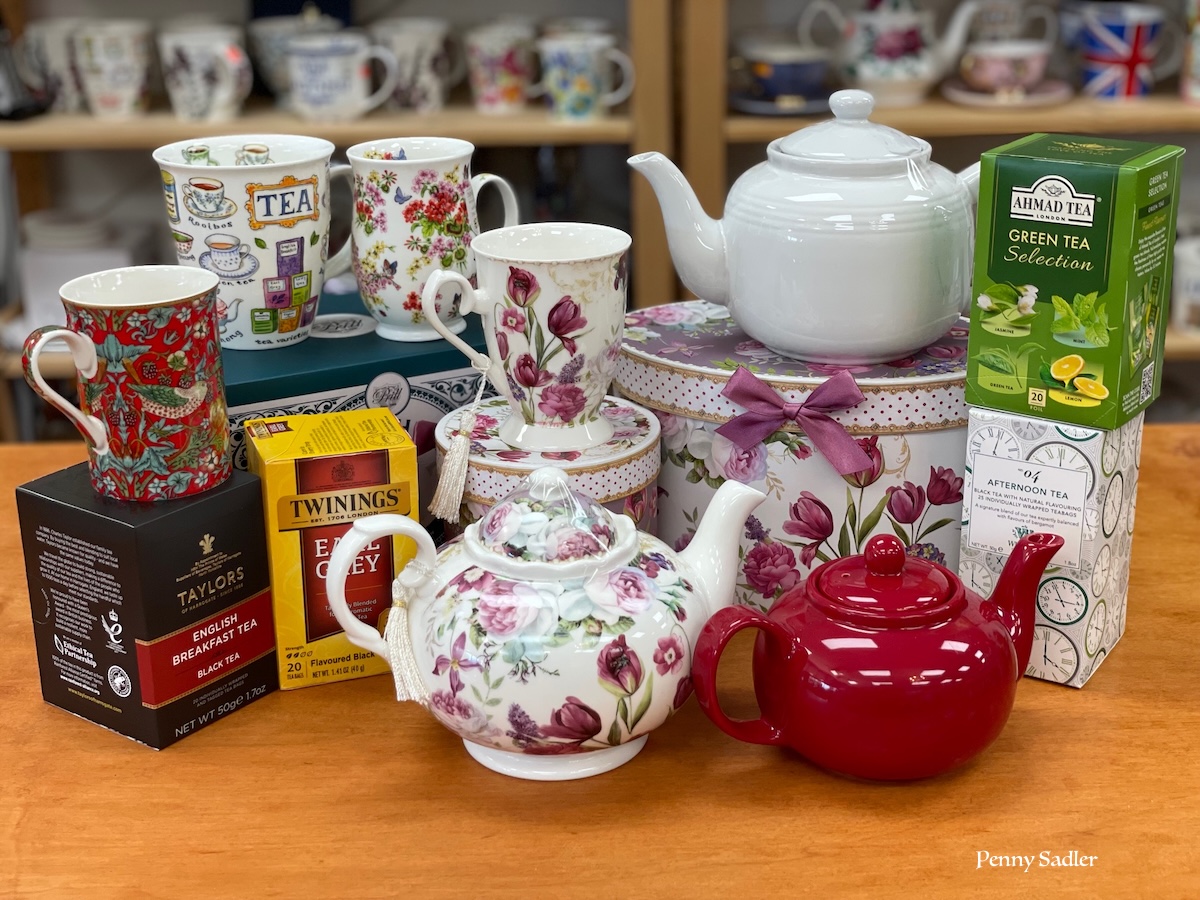
If drinking wine in the right glass enhances the aromas and overall experience, brewing your tea in a pot that you love elevates the whole ritual. It doesn’t have to be expensive or precious.
It’s good to have options. When I have guests I use a larger one with the filter in the center to make several cups at once. However, most of my teapots these days are decorative but try it and see if you enjoy making your personal tea this way. Again, do what works for you.
One practical note: always warm your teapot before brewing. Simply pour a little boiling water in, swirl it around, and discard it. This keeps the water temperature stable when you add your tea, which as we just discussed, makes a real difference in the final cup.
Drink tea from a cup you love
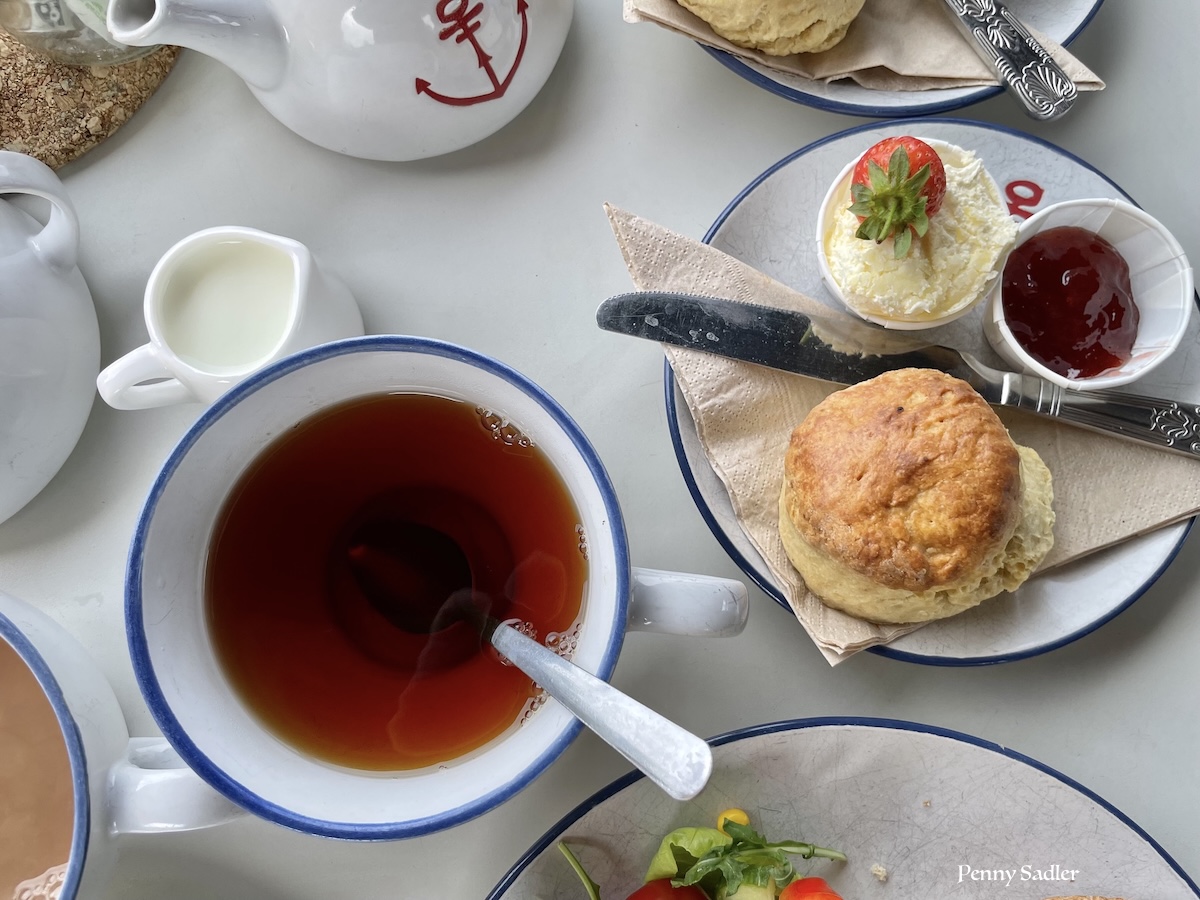
This may sound frivolous but a true tea drinker wouldn’t have it any other way, drink your tea from a nice cup. Cups come in all sizes and shapes with different designs. My favorite cup has an iconic London scene on it. The designer was James Sadler, a British artisan known for his beautifully illustrated teacups and teapots, Of course, I had to buy it!
What not to do
Sometimes knowing what to avoid is just as important as knowing what to do. I learned some key don’ts from Mariëlla Erkens who in addition to being an author, is also a two time winner of the Dutch tea sommelier championships.
Here are three common mistakes that are ruining your cup of tea:
Don’t reheat your water. I used to do this all the time. A little extra water in the kettle, why not? It was convenient and I thought wasteful to toss it out. But was it good for my tea? Absolutely not. Reboiling drives out the oxygen, making the water more alkaline and your tea bitter and tannic. Always start with fresh cold water. Now I’m more careful to just use as much water as I need instead of mindlessly filling the kettle.
Don’t start with hot tap water. It might seem like a time saver but hot tap water has often been sitting in your pipes or water heater, making it stale and flat. Always start with fresh cold water and heat it properly. Besides, if you’re using a Brita or PUR filter, it explicitly says, do not run hot water through the filter.
Don’t over steep or under steep. Leaving your tea too long makes it bitter and astringent. Not long enough and it tastes weak and watery, the leaves don’t unfurl and you never get the nice aromas. Refer back to the temperature and timing guide above and resist the urge to guess.
Tea is the second most popular drink in the world. And it truly is an international beverage. While it might be challenging to find a well brewed cup in some places, Italy comes to mind, if you know what’s needed you can seek out cafes and shops that specialize in tea. Or, if you’re traveling, make your own. Are you a tea drinker? What do you like, black, green, oolong, matcha? Leave a comment and let me know.






2 comments
Thank you so much for this article on tea. I always had coffee in the morning until I experienced AFib. I switched to decaf green tea. Now thanks to an operation (The Wolf Procedure), I no longer have AFib, so I now drink regular tea in the morning. I can also drink coffee, but I’ve gotten used to the tea. I enjoy black or green tea. I also enjoy the green tea frappucino (matcha) at Starbucks. It’s the only time I add anything to my tea. Otherwise it’s straight tea for me. I first learned to drink hot tea when I was eight or ten at the Episcopal church we attended. I must be unique among Texans — I can’t stand iced tea. I love a properly prepared cup of tea — particularly if I’m in England at the time — but I’m generally so lazy that I just use the microwave! Thanks again –from a faithful reader.
Hi Marily, Thank you for reading and being a faithful reader. Also, love the comment about iced tea. I actually do like it. I can’t help it. Every Sunday dinner at my grandmothers for 35 years. Unsweetened please!